Your Cart is Empty

By HEST · Updated April 2026 · 6 min read
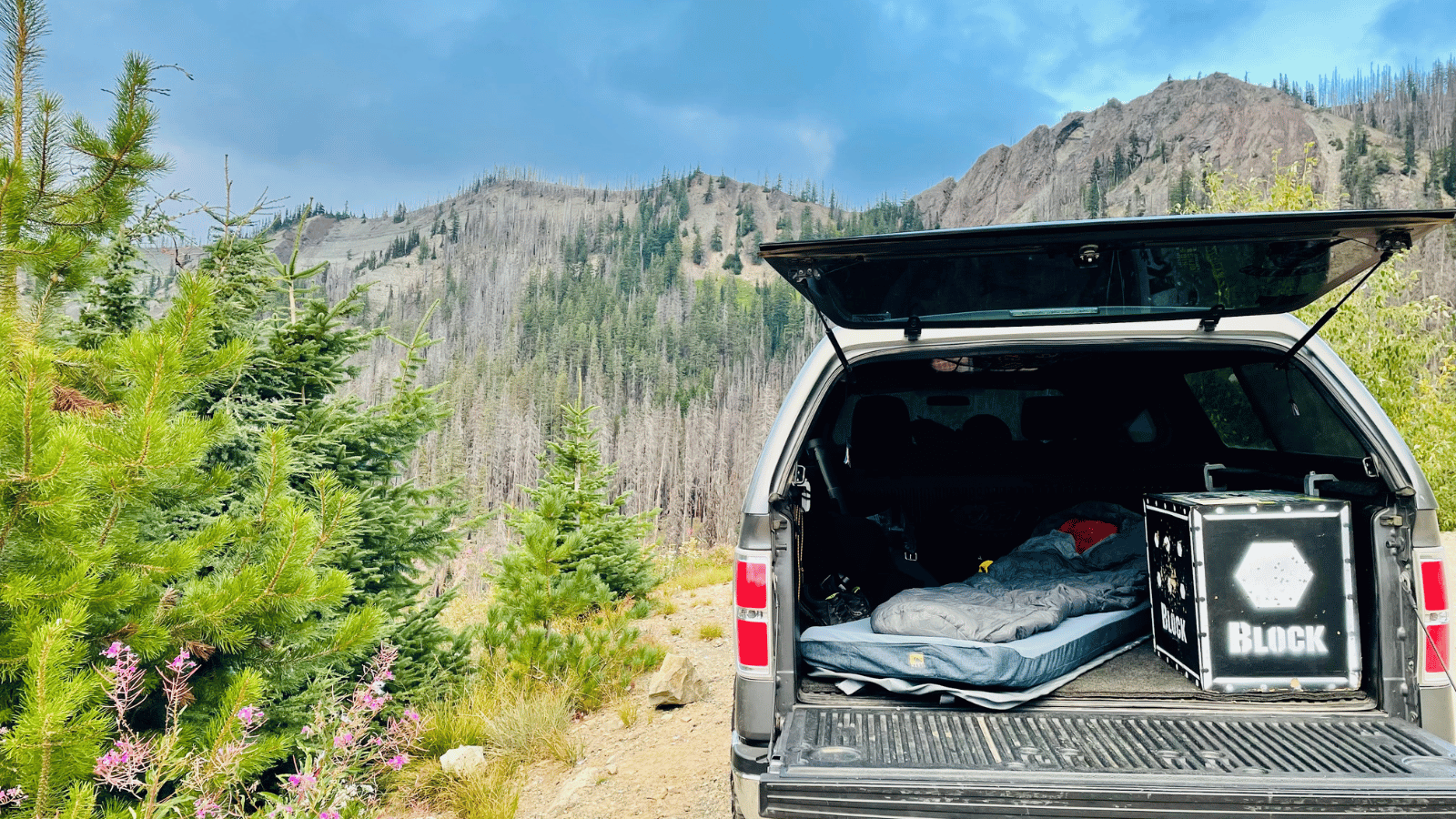
There's something uniquely freeing about dropping your tailgate and calling it a campsite. No tent poles. No ground-level cold air. No searching for a flat patch of earth. Your truck is already a platform — the only question is how comfortable you're willing to make it.
Truck bed camping has grown from a road-trip workaround into a legitimate way to travel. Overlanders, hunters, surfers, trail runners, and weekend adventurers have all discovered the same truth: if the sleep is good, the whole trip is better. And sleep in a truck bed is only as good as what's underneath you.

Not all truck bed mattresses are built the same. The three main types each have different tradeoffs for comfort, packability, and durability.
Foam mattress (Best overall — most popular)Dense foam — especially high-resilience or memory foam — delivers consistent support and comfort. No inflation needed. The HEST Foamy is built specifically for truck beds: compact enough to roll, substantial enough to sleep on every night.
Air mattress (Budget option)Portable and adjustable, but prone to deflation overnight and vulnerable to punctures from truck bed liner texture. Works in a pinch — but rarely holds up trip after trip.
Self-inflating pad (Packability first)Thinner than foam but packs smaller. Good for ultralight setups where weight matters more than comfort. For longer trips or repeat use, most people upgrade to foam.
"Comfort is the thing you don't notice when it's right — and can't stop noticing when it's wrong. A truck bed mattress is the one piece of gear that affects every single hour of your trip."
Truck beds aren't standard — dimensions vary significantly by make, model, and cab configuration. Before you buy, measure your specific bed from the tailgate to the cab wall, and wheel well to wheel well at the narrowest point.
Common truck bed sizes
Short bed (5.5–5.8 ft): Most common on crew cab trucks. About 65–68" long, 60–65" wide between wheel wells.
Standard bed (6.5 ft): The most versatile size — fits most adult sleepers without needing to angle.
Long bed (8 ft): Found on work trucks. More space than most people need for sleeping, but easier to fit two people comfortably.
The wheel wells are usually the deciding factor. Most truck beds narrow to around 44–48 inches between wells. A mattress that's 48" wide sits flush inside; anything wider needs to sit on top of the wells (which creates an uneven sleeping surface) or be trimmed.
Thickness: how much do you need?
For truck bed use, 4–6 inches of high-density foam is the sweet spot. Thinner than 4" and you'll feel the bed liner. Thicker than 6" and you lose cargo height if you're running a topper — and the mattress becomes harder to pack and store.
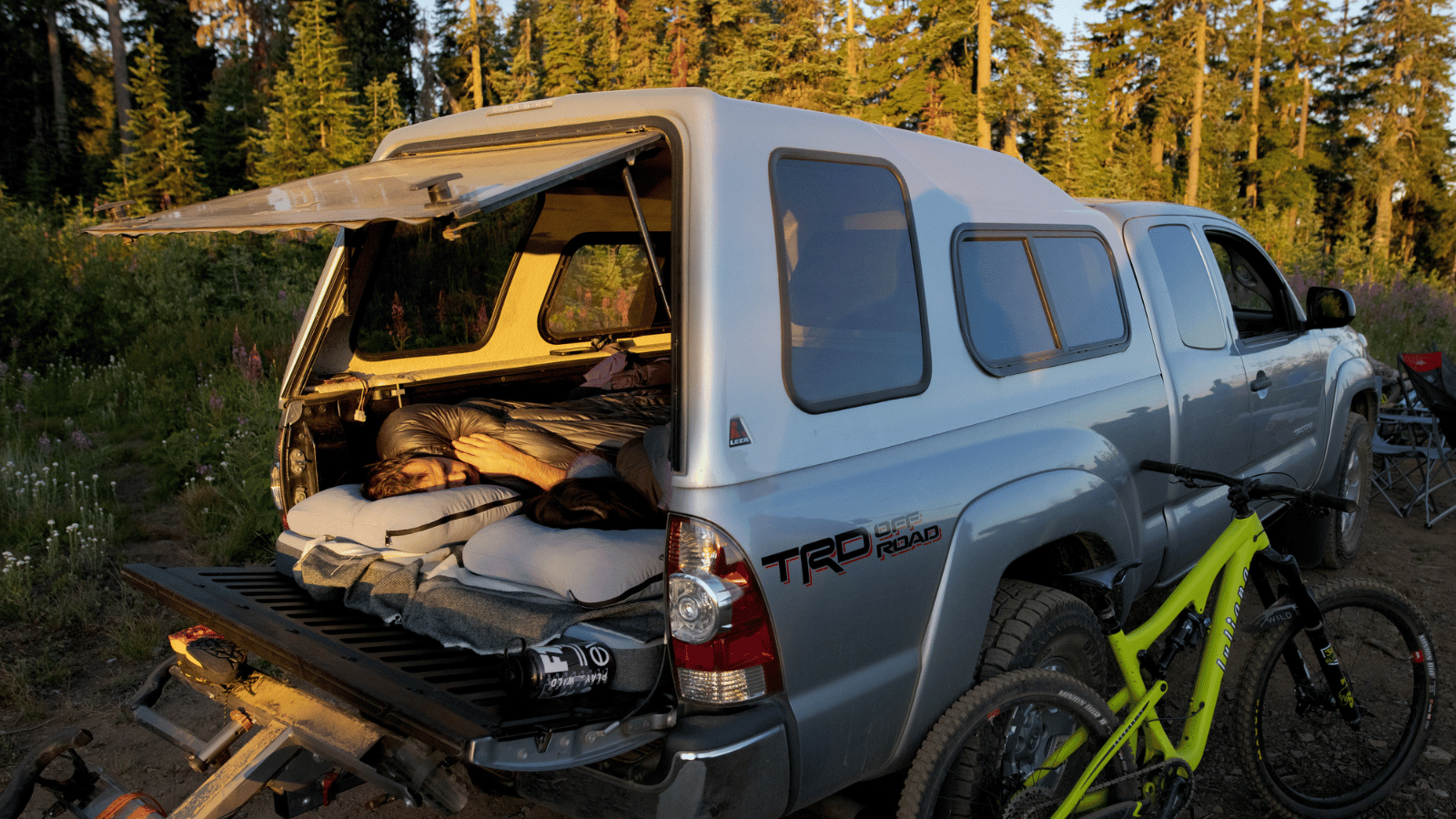
There's a lot of marketing language in the mattress space. Here's what genuinely affects your sleep in a truck bed.
Foam density and ILD rating
Foam density (measured in lbs per cubic foot) tells you how durable the foam is. ILD (Impression Load Deflection) tells you how firm it feels. For truck bed camping, look for at least 1.8 lb density with an ILD between 25–35 for most sleepers — firm enough to support, soft enough to be comfortable on a hard surface below.
Cover material
A truck environment is dusty, damp, and rough on materials. Look for a durable, removable, washable cover. Bonus if it has a non-slip bottom — you don't want your mattress sliding when you climb in or when the truck moves.
Rollability and packability
Even if you're leaving the mattress in your truck full-time, a mattress that can roll down tightly is easier to stow when you need the bed for cargo. Foam with good resilience bounces back to shape even after being rolled for weeks.
Temperature regulation
Metal truck beds conduct cold. Even in moderate temperatures, the ground chill can work its way up through a thin pad. Choose a foam that provides real insulation, and pair with a quality sleeping bag or blanket system rated for the temperatures you'll actually encounter.
Pro tip: If you're camping in a truck bed regularly, consider a truck bed topper or camper shell. It turns your truck into a legitimate sleep shelter and extends your three-season sleeping into genuine four-season use.
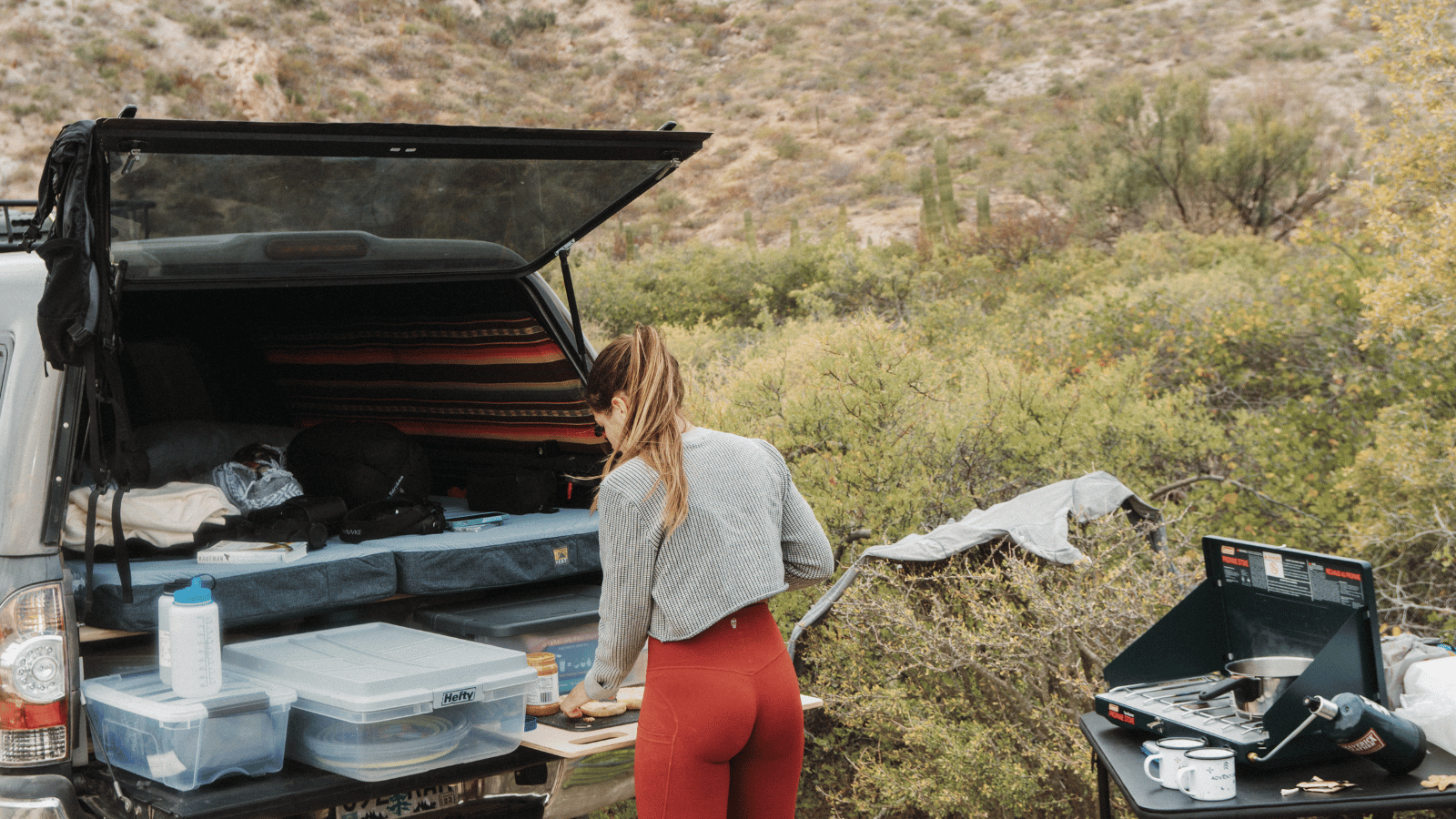
Good gear is only part of the equation. How you set up your sleep system matters just as much.
Level the truck first. Find the flattest ground you can, or use leveling blocks under your tires. Sleeping on a slope — even a gentle one — adds up over a full night.
Add a carpet or liner under the mattress. A truck bed rug or foam underlayer adds insulation and keeps the mattress from sliding, especially if you don't have a textured liner.
Use a sleeping bag rated 10°F below the forecast low. Temperatures drop more than expected overnight, and you lose significant warmth sleeping in a truck bed versus a tent (less insulation below you).
Ventilate your topper or shell. Condensation builds quickly inside an enclosed truck bed. Crack a window or vent to reduce moisture overnight.
Keep your setup consistent. The beauty of truck bed camping is speed — being able to pull off a road and be sleeping in under five minutes. A consistent system you can set up in the dark is worth more than a complex one that's marginally more comfortable.
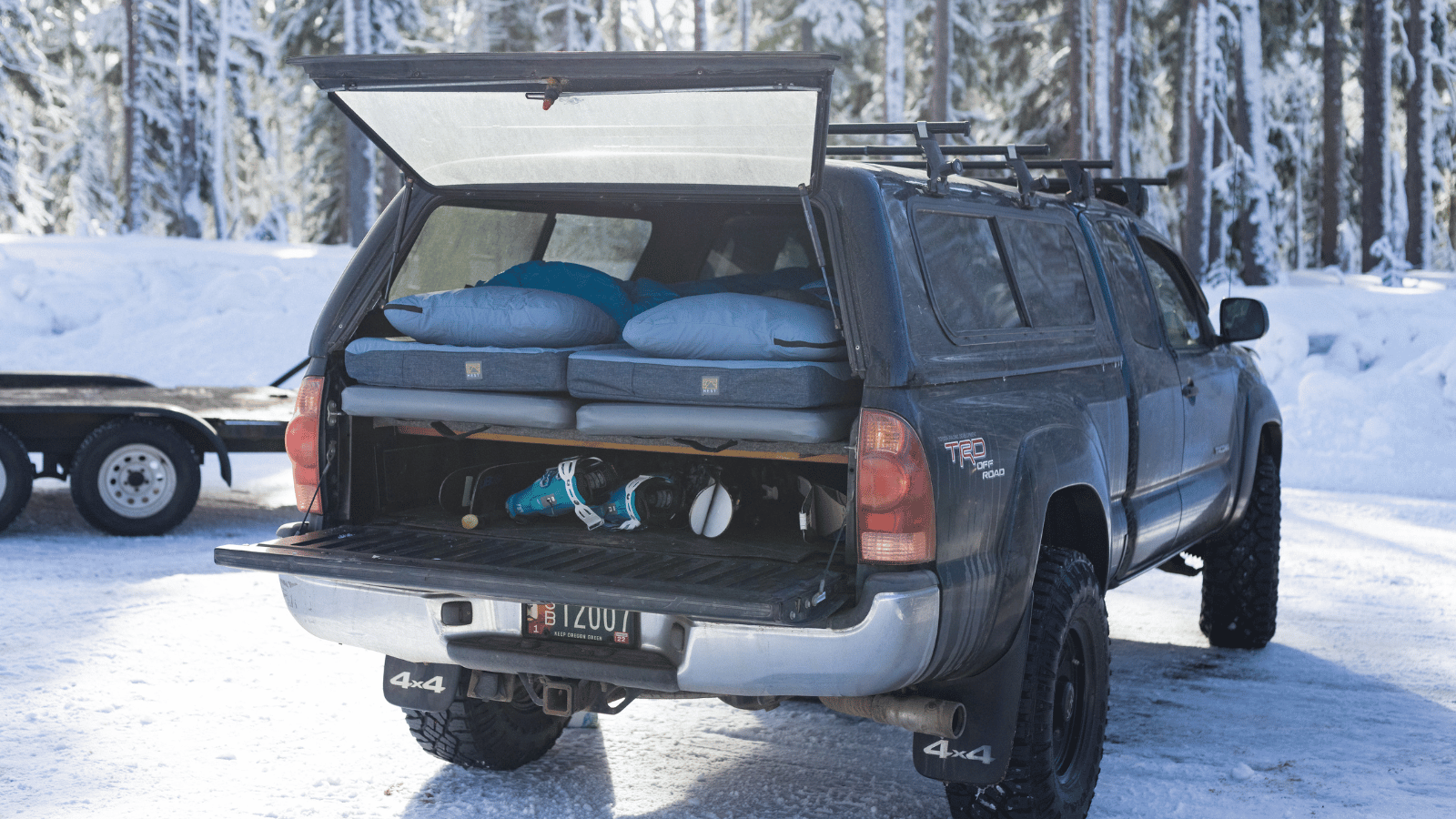
Can I use a regular mattress in my truck bed?
You can, but a regular mattress is rarely the right fit. Standard mattress sizes don't match truck bed dimensions, and most aren't designed for the humidity, cold, and rough surface of a truck bed environment. A purpose-built truck camping mattress will fit better, pack more easily, and last longer.
How do I keep warm sleeping in a truck bed?
Insulation below you matters as much as above. Use a foam mattress with at least 4 inches of thickness to buffer the cold metal bed. Pair it with a sleeping bag rated for temperatures 10–15°F below your expected overnight low. A truck topper or shell dramatically reduces wind chill and holds body heat far better than an open bed.
What size mattress fits in a truck bed?
It depends on your specific truck. Measure your bed length from the tailgate to the cab, and your width between wheel wells at the narrowest point. For most crew cab trucks with a short or standard bed, a mattress around 48" wide and 72–78" long will fit well. Always check your specific truck's measurements before purchasing.
Is truck bed camping comfortable?
With the right mattress and setup, absolutely. Many overlanders and road trippers find truck bed sleeping more comfortable than tent camping — no ground roots or rocks, elevated off the cold earth, and faster to set up. The quality of your sleep system is the single biggest variable.
Do I need a truck topper for truck bed camping?
Not necessarily. You can sleep in an open truck bed in good weather — it's actually a great experience under clear skies. But a topper or camper shell adds weather protection, security, and warmth that makes truck camping more versatile and reliable year-round.